The first hint came from the dogs.
On a mild March afternoon, they were racing around the yard like it was already late spring, noses buried in thawing grass, tails high. Then, suddenly, the wind shifted. A sharp, metallic cold crept in, the kind that bites the inside of your nose and makes you blink. The sky was still blue, the sun still bright, but the air felt wrong, slightly out of season, like a winter coat forgotten on a June chair.
Your phone buzzed with a notification: “Major polar vortex disruption underway.”
You probably rolled your eyes. Another scary headline, right?
Except this one isn’t clickbait.
A huge piece of the Arctic is about to wobble out of place
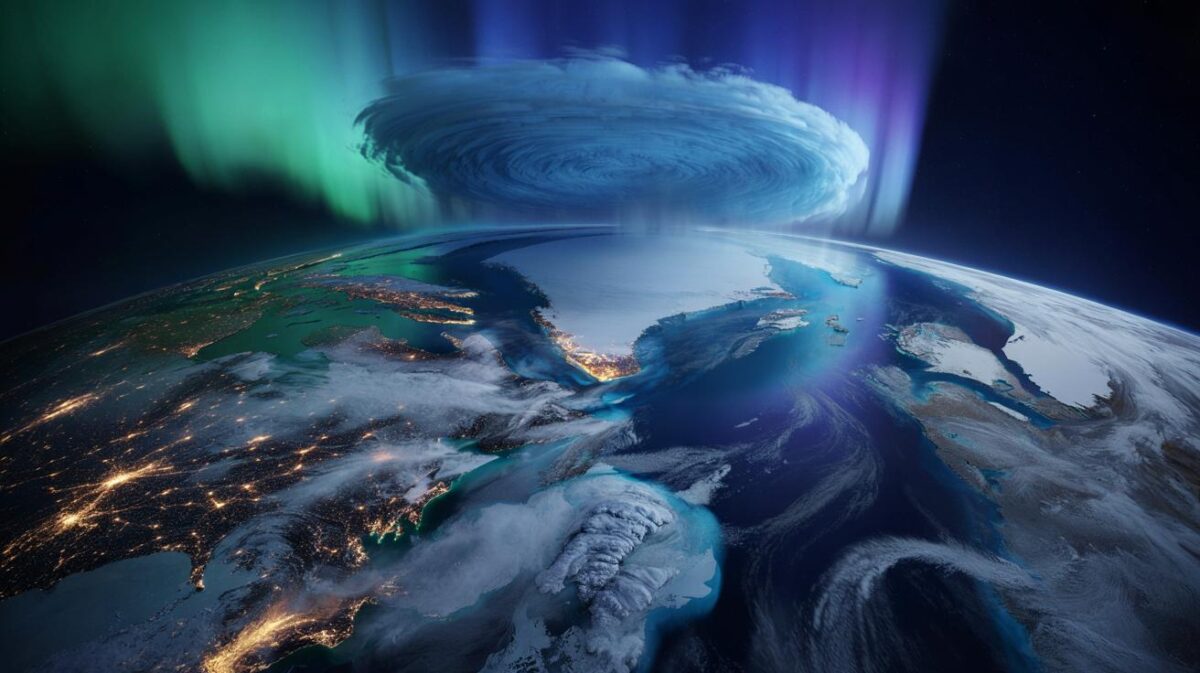
High above our heads, at about 30 kilometers up, something massive is twisting out of shape.
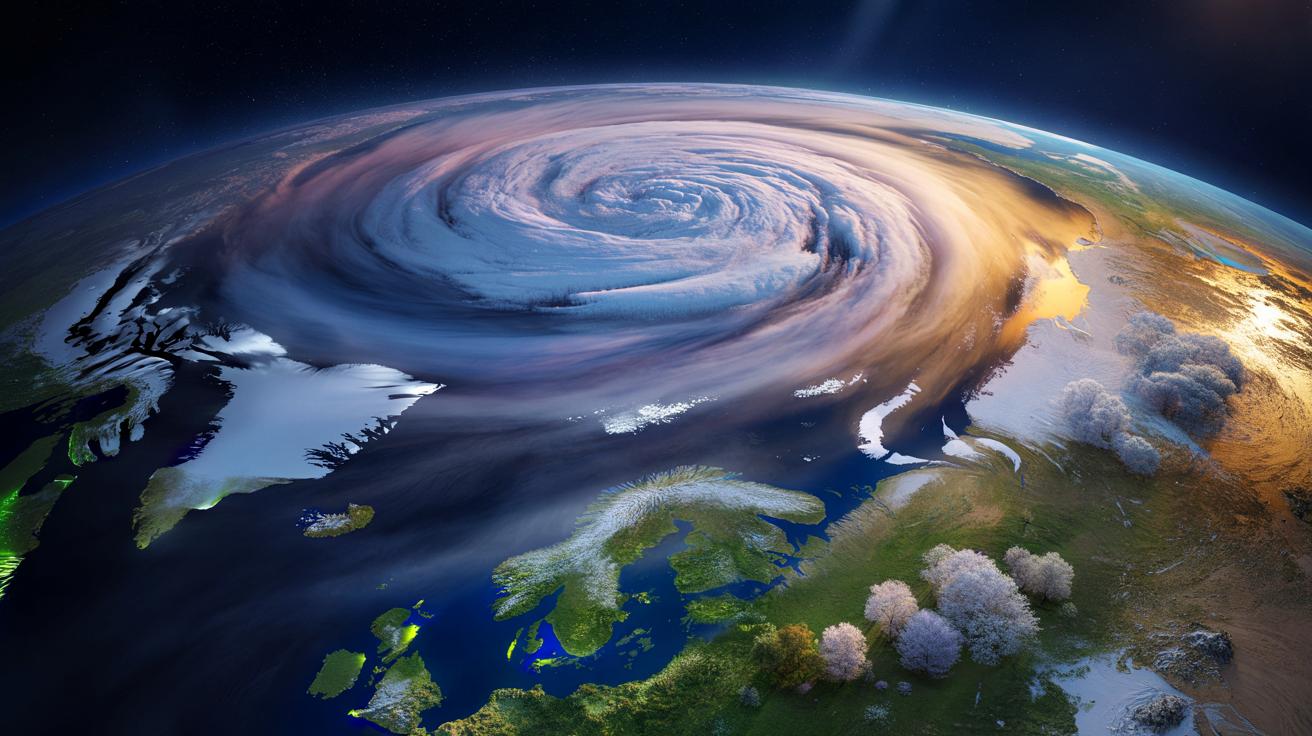
Meteorologists call it a “sudden stratospheric warming” event, when the polar vortex — that ring of icy winds that usually traps brutal cold over the Arctic — suddenly weakens or even splits. That’s what’s starting now, and the scale of it in March is almost unheard of.
On weather models, it looks like the top of the world is cracking open and spilling its chill southward.
Down here, it will land as confused seasons, whiplash temperatures, and storms that feel like they took a wrong turn on the calendar.
If you watch the data animations, it’s unsettling.
That tidy, tight swirl of purple wind around the North Pole begins to buckle, then elongate, then fold over itself like taffy being pulled. By early March, large chunks of those frigid upper-level winds are displaced toward North America and Eurasia.
In past disruptions, this has meant weeks of abnormal weather.
Think late-season snowstorms dropping a foot of powder on cities already counting down to patio season. Or deep-freeze nights arriving just after trees start to bud, burning delicate blossoms in a single cruel swoop. For farmers, gardeners, and anyone who just packed away their winter coat, this is more than a curiosity on a chart.
What’s happening isn’t magic, it’s physics.
Waves of energy from lower latitudes — driven by mountains, storm systems, and shifting temperature contrasts — crash upward and disturb the normally stable polar vortex. When those waves get intense enough, they warm the stratosphere above the Arctic by 30 to 50°C in just a few days.
That sudden warming breaks the vortex’s grip, slowing or even reversing the winds.
Once that happens, the normal conveyor belt of the jet stream starts to twist and meander, letting cold Arctic air spill south and warmer air push north in strange, lopsided patterns. **For March, the projected disruption this year is off the charts**, rivaling events we usually see in the heart of winter, not when flowers are trying to bloom.
What this means on the ground: real-life impacts in the coming weeks
So, what does a broken polar vortex feel like when you’re standing in your driveway?
In simple terms: expect the weather to behave like it has trust issues. One week might feel like late April, with soft breezes and light jackets. The next could snap back to mid-January, with biting wind, icy roads, and a sudden craving for soup you thought you were done with.
➡️ A new maker of passenger jets arrives: it’s not Chinese but Indian
If you live in the northern U.S., Canada, or parts of Europe and Asia, you’re squarely in the impact zone.
This kind of disruption stacks the odds for cold outbreaks, late snow, or at least relentless gray, when you were emotionally ready for tulips and sunshine.
There are real stories behind those anomalies.
In March 2018, a powerful polar vortex disruption triggered the “Beast from the East” in Europe: record cold, heavy snow, travel chaos, and frozen pipes in homes that were never built for Siberian-style air. In the U.S., earlier events have lined up with deep freezes in the Midwest and Northeast, shutting schools and snarling power grids.
Statistically, not every disruption brings disaster to every region.
But this one is large, sharp, and unfolding late in the season, which raises the risk that some places will see frost and snow when their ecosystems — and their minds — have shifted to spring mode. For sensitive plants, early crops, and fragile power infrastructure, timing is everything.
Scientists are watching this event with serious attention.
They’ve learned that strong stratospheric disruptions tend to echo downward over one to three weeks, reshaping the jet stream closer to the surface. The models now suggest a greater chance of “blocking” patterns — stalled weather systems — that can lock in cold over one region and unseasonable warmth over another.
This isn’t just trivia for weather nerds. **A stubborn cold block in late March can cost farmers money, gardeners a full season, and cities millions in heating and snow-removal budgets.** Energy markets react, wildlife migration is nudged off schedule, and people simply feel worn out by the constant back-and-forth.
Let’s be honest: nobody really tracks stratospheric temperature anomalies on a daily basis.
But you’ll feel the outcome when you’re scraping ice off your windshield after a week of eating lunch outside.
How to live through a chaotic March without losing your mind (or your plants)
The first step is simple: resist the urge to “declare spring” too early.
Hold off on putting away all your winter gear. Keep a warm coat, gloves, and a decent hat within easy reach, even if the forecast looks friendly for a few days. This is the kind of setup where a 16°C afternoon can be followed by a sub-zero windchill two days later.
If you garden or farm, treat the next few weeks as a high-alert window.
Delay early planting where you can. Use row covers, fleece, or even old sheets to protect beds when night temperatures dip. *Those flimsy-looking cloths can be the difference between waking up to green leaves or blackened stems.*
Weather anxiety is real, especially if you remember frozen pipes, icy roads, or power outages from past cold snaps.
You don’t need to go full doomsday prepper, but a few calm, practical steps go a long way. Check that you still know where the flashlights are. Keep a couple of days’ worth of food that doesn’t demand a working stove. Charge power banks before a cold front with strong winds.
Most people stumble not on the temperature but on the swing.
One day, your kids are at the park in hoodies; two days later, the bus stop feels like Siberia. That’s when thin jackets, forgotten hats, and low moods collide. A small “transition shelf” near the door — with gloves, scarves, and a warm layer — turns that chaos into a 10‑second decision.
Humans have a short weather memory and a long weather frustration.
We crave consistency, and a broken polar vortex offers the opposite. So be gentle with yourself if you feel oddly tired or irritable when the fourth “late winter” arrives. You’re not imagining it; your body tracks light, temperature, and routine.
“From a psychological standpoint, erratic late-season cold can feel like a false promise,” says a clinical psychologist who works with seasonal affective disorder. “People gear up emotionally for spring as a kind of reward. When the weather rewinds, it can trigger disappointment that’s deeper than just, ‘Oh, it’s chilly again.’”
- Check a trusted local forecast daily during this period, not just once a week.
- Layer your clothing instead of committing to either “full winter” or “full spring.”
- Keep basic cold-weather supplies until at least early April: salt, scraper, blankets in the car.
- Protect early blossoms and seedlings on frost nights with covers or even cardboard boxes.
- Plan flexible outdoor plans so a sudden cold shot doesn’t ruin your whole mood.
The bigger picture: when winter forgets the calendar
This isn’t just a quirky weather story, it’s a hint about how our seasons are morphing.
On the one hand, the planet is warming, bringing earlier thaws and hotter summers. On the other, the machinery that moves cold air around — like the polar vortex — can misfire in spectacular, disruptive ways. That means more people living through winters that don’t politely end, but lurch and stutter into spring.
Researchers are still arguing over how much climate change is tweaking these high-altitude patterns, and the science isn’t settled. What is clear is that the atmosphere now holds more energy, more moisture, and more potential for extremes. When the polar vortex cracks in March, it doesn’t just feel odd; it exposes how delicately balanced our seasonal rhythms really are.
We’ve all been there, that moment when you stand at the window and think, “Didn’t we do this snow thing already?”
You shovel, you slip, you grumble, and then two days later the snow melts and birds start shouting from the trees like nothing happened. That emotional seesaw is about to be more common, not less, over the coming decades.
Maybe the most honest response isn’t panic, but a quiet recalibration.
Instead of expecting tidy seasons, we start expecting messy ones. We become a little more flexible, a bit more prepared, and a lot less shocked when March feels like January in the morning and May at lunch. **The polar vortex disruption unfolding now is a preview of that messy future — unsettling, yes, but also a reminder of how alive and unpredictable our sky still is.**
| Key point | Detail | Value for the reader |
|---|---|---|
| Unusually strong March disruption | Polar vortex weakening and splitting at a magnitude rarely seen this late in the season | Signals a higher chance of wild temperature swings and late-season cold snaps |
| On-the-ground impacts | Potential for frost, snow, and blocked weather patterns in mid-latitudes | Helps readers prepare homes, routines, and expectations for unstable weather |
| Practical coping strategies | Layered clothing, delayed planting, basic emergency readiness | Reduces stress, financial loss, and health risks during the disruption |
FAQ:
- Is this polar vortex disruption caused by climate change?Current research suggests climate change may be influencing how often and how strongly the polar vortex gets disturbed, but scientists don’t fully agree yet. What’s clear is that a warmer background climate can amplify extreme events when they do happen.
- Will my region definitely get hit by extreme cold?No, a disrupted vortex tilts the odds, it doesn’t write a guarantee. Some regions may see harsh cold, others may stay mild or even warmer than average, depending on how the jet stream sets up.
- How long could the effects last?Once the stratosphere is disturbed, its influence on surface weather can linger for two to six weeks. That doesn’t mean constant extreme cold, but a higher chance of unusual patterns during that window.
- Should I delay spring planting?If you’re in a region prone to late frosts, it’s wise to wait a bit longer than usual or be ready to protect young plants. Local frost dates and updated forecasts are your best guides.
- Can this damage power grids and infrastructure?Yes, sharp cold snaps and heavy late snow can stress energy demand, freeze pipes, and weigh down lines. Simple steps like insulating pipes and keeping backup heat options can soften the impact.